Don’t worry, this isn’t a post about infidelity. Or at least not about infidelity with my husband, Andy. It’s about my longing for something newer and different, to have and to hold forever and ever, on my ring finger.
That’s right, folks, I’m redesigning my engagement ring. And I’m bringing you along for the ride, from start to finish, in several installments.
Here is:
Part I – The Inspiration
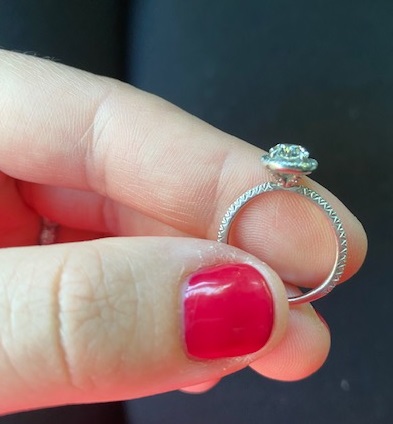
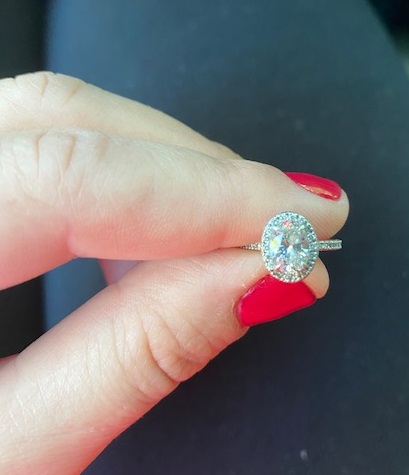
I got engaged in 2013. Andy and I worked with a lovely consultant named Ellen at Steve Quick Jewelers in Chicago to design my original engagement ring. You’ve seen it here before: it features an oval diamond in a halo setting with a thin micropavé band, all set in platinum. It is feminine, sweet, young, and pretty vanilla:
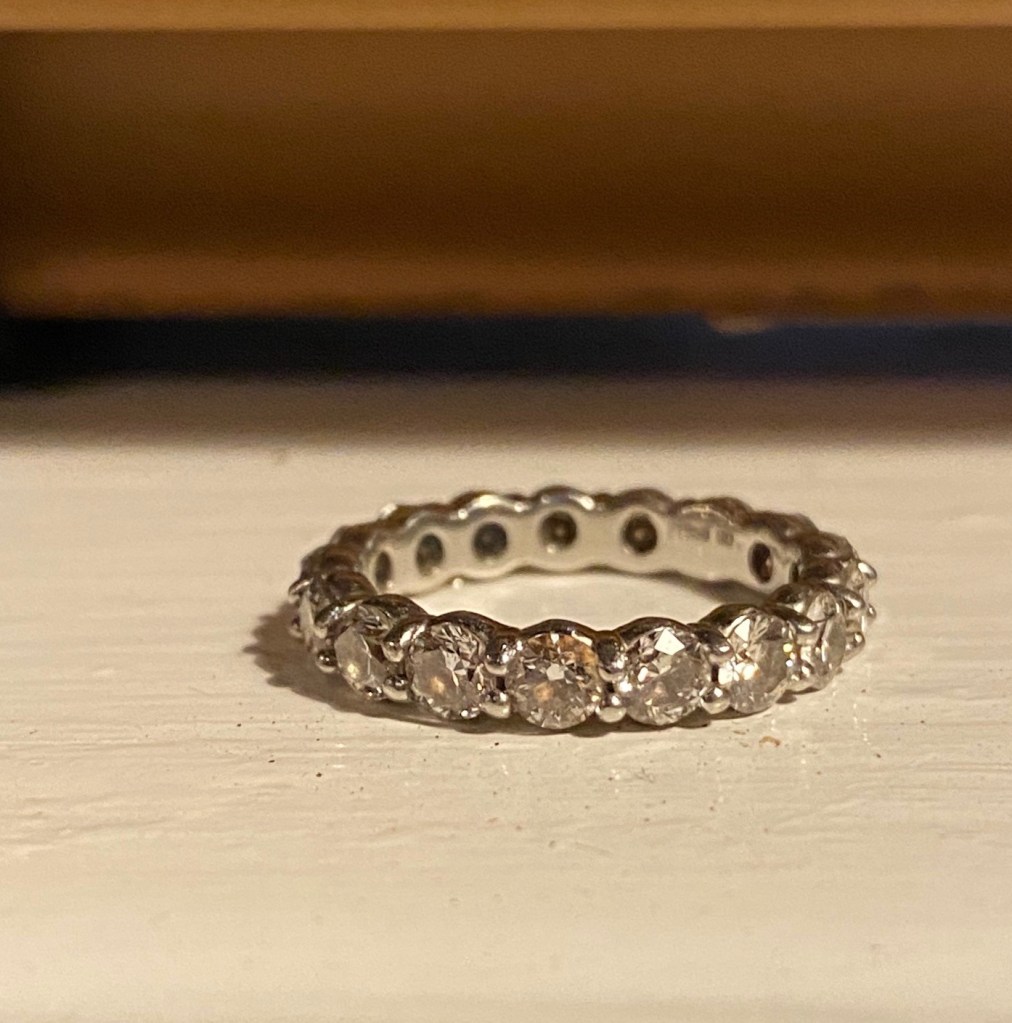
Over the last seven years, I’ve had to resize my ring several times as my fingers expanded with pregnancy and the seasons. Following my daughter Sloane’s birth in 2019, my ring just didn’t fit anymore at all (for reference, I went from a size 4.5 at the time of my engagement to 6+ now!). Rather than re-size it yet again, I started wearing a single diamond eternity band in its place:
Apart from the sizing issue, I also started to feel a bit…disconnected from the ring over time. My jewelry style evolved to be less dainty and more bold. I began to covet rings that made an impact on the finger and reflected a stronger point of view. Frankly, the halo look also started to feel somewhat dated.
I have hated seeing the ring relegated to my jewelry box, unworn and unloved. I figured someday I would gift it to my children, but until then, it would just lay dormant.
And then, over the summer, I had brunch with a friend from high school, Kaya, whose dad is a jewelry designer. Kaya started telling me about how she was working with her dad to redesign her engagement ring using the existing diamond, to create an entirely new setting. This possibility had never occurred to me, but the thought was thrilling! Kaya encouraged me to reach out to her dad for a consultation.
I immediately raised the idea with Andy to gauge his feelings. He was initially saddened by the notion of changing something that carried so much sentimental weight, but then quickly agreed that I should have the ring I love that suits me now and, most importantly, that I will actually wear.
I scheduled an appointment to meet with Kaya’s dad and started to pull together inspiration photos. I already had a pretty clear vision of what I wanted, especially after having spent months writing this blog and studying literally thousands of ring designs.
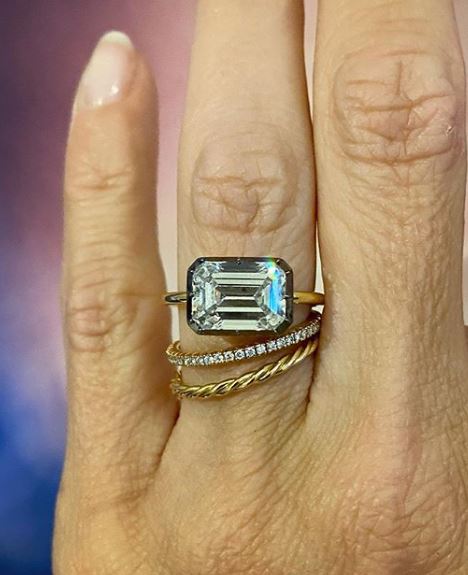
My key parameters were this: I want to flip the orientation of the oval to horizontal (or “east-west,” as we say in the biz); change the band to plain yellow gold with a highly rounded profile; and set the diamond in a blackened gold collet. I also want a matching plain gold band that I can stack with the engagement ring and my existing diamond eternity band.
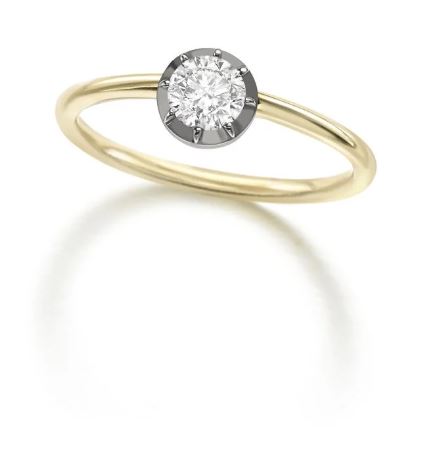
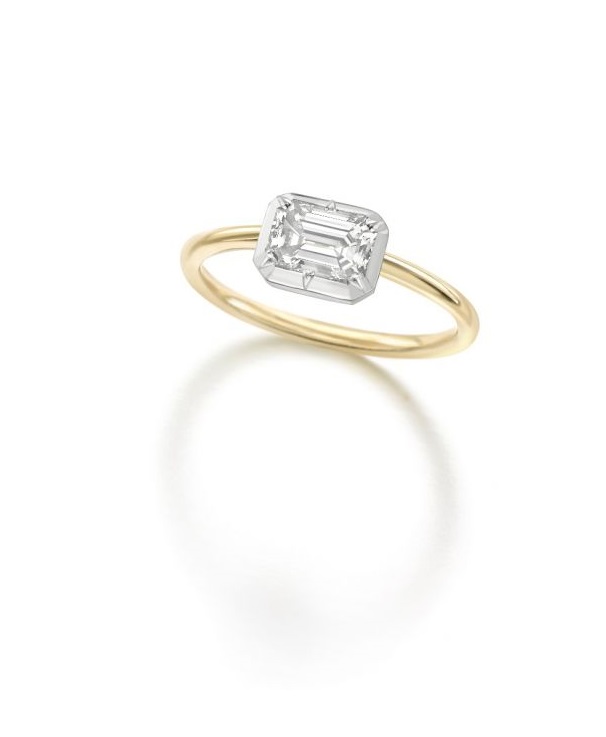
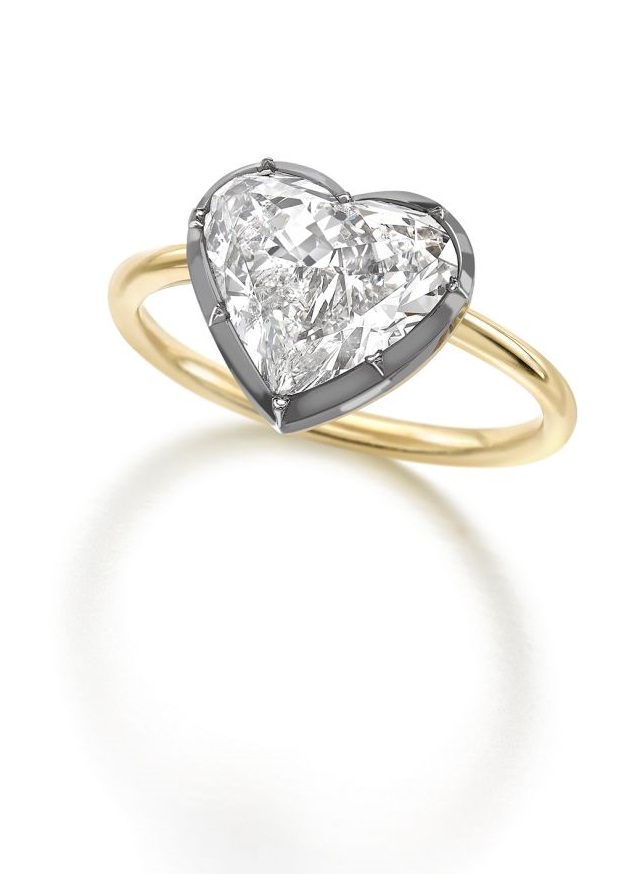
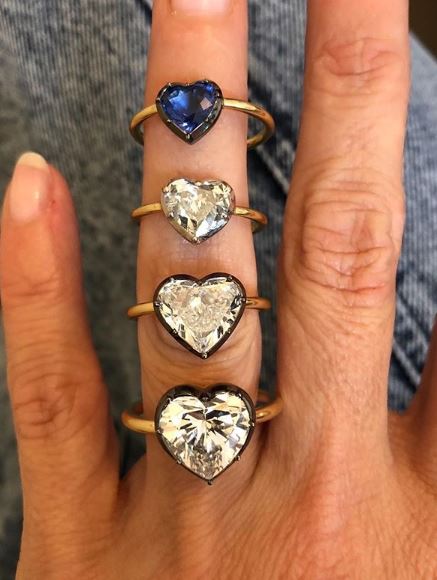
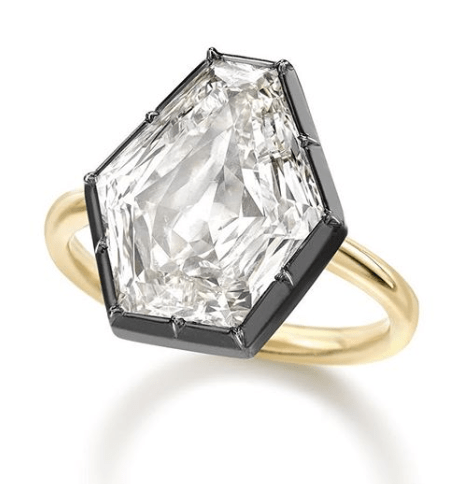
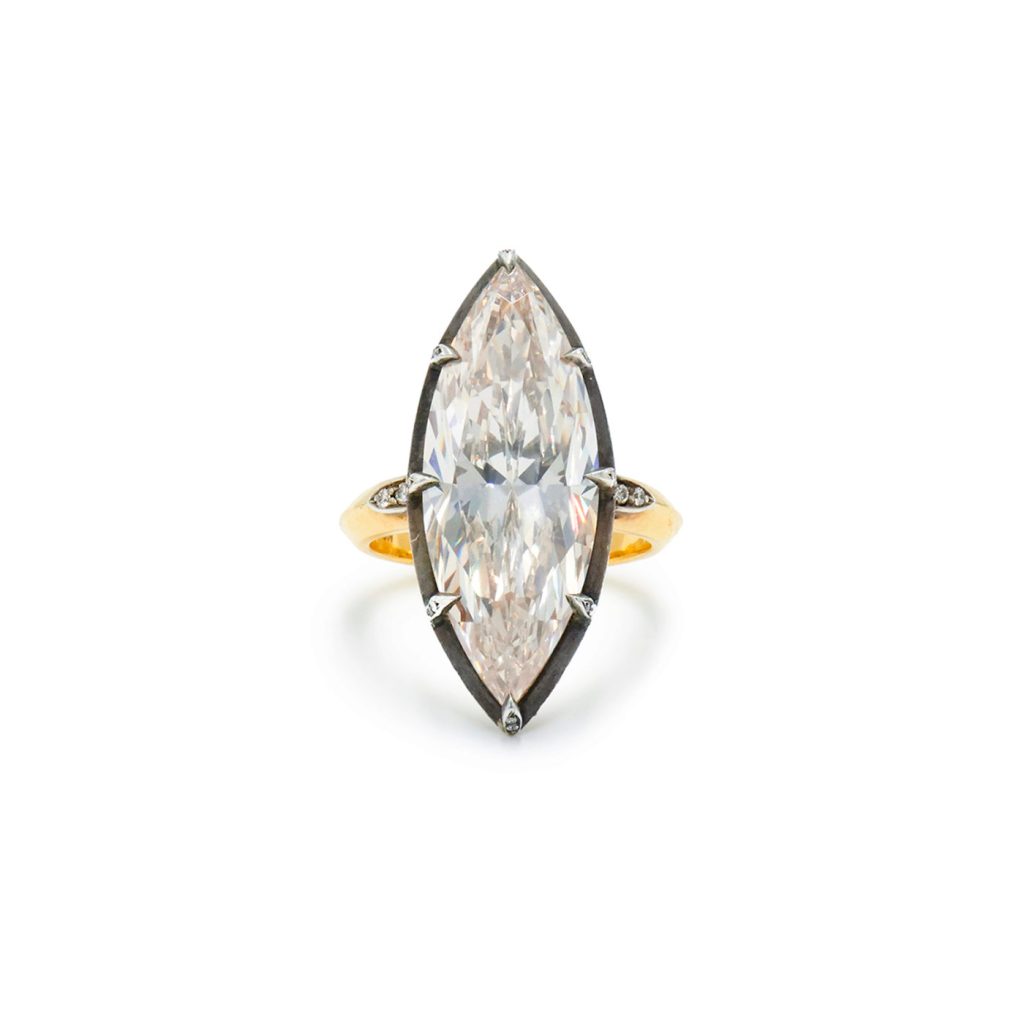
Perhaps my most loyal readers won’t be surprised to know that the primary inspiration for this look comes from my all-time favorite jewelry designer, Jessica McCormack. (As an aside, this style is an homage to Georgian jewelry, which is the subject of a future post.) Here are some of JM’s rings that inspired my new design:
I also found these Fred Leighton rings with a similar design:
This look is so different than my existing ring and just feels more sophisticated, unique, and bold. I think the change from platinum to yellow gold will be an exciting one, especially since I find myself wearing mostly yellow-gold-tone jewelry these days. I also think the east-west setting will give the diamond new life and a less traditional feel.
Stay tuned for the next installment…The Consultation. Coming soon!
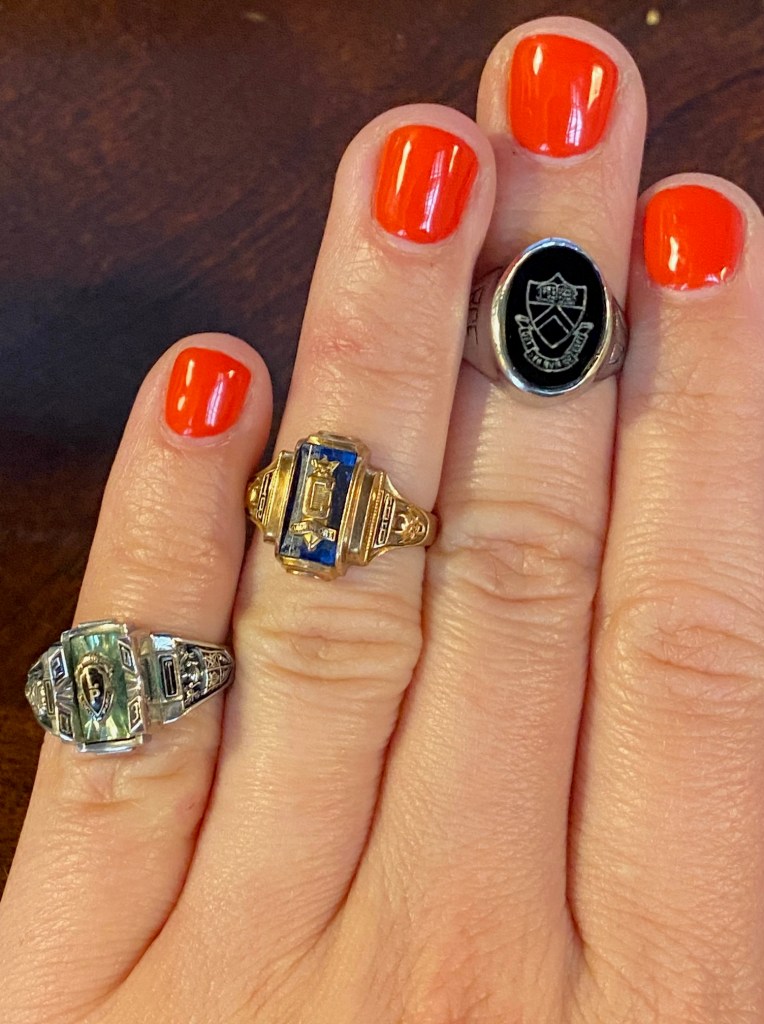
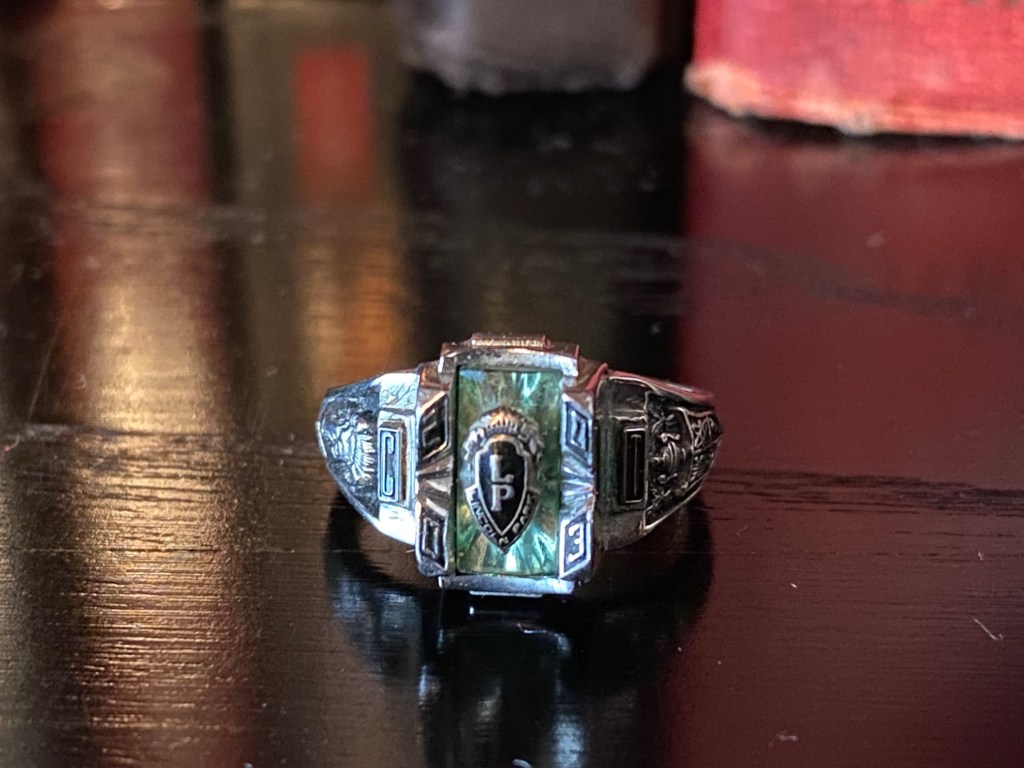
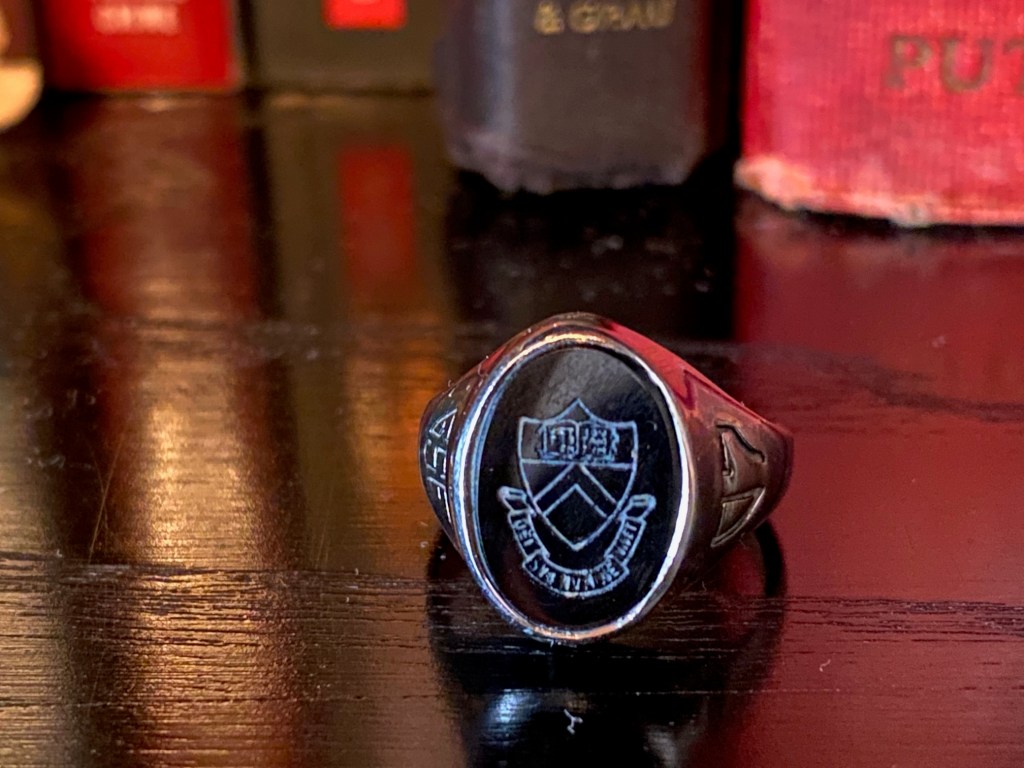
This fall, the return of children to school (in some form or another) got me thinking about class rings. My class rings are among the jewelry pieces I wear least often, if ever. I have one from high school and one from college, shown below:
My high school ring.
My high school ring is very intricate. Set in sterling silver, it features our school’s mascot on one shoulder and crest on the other, an “LP” insignia (for “Lincoln Park”) on a central emerald-shaped prasiolite stone, my initials on either side of the stone, and my graduation year in four segments surrounding the stone. One feature I had forgotten about until now is that my full signature is etched inside the band. Funny to see that hasn’t changed much in 17 years!
My college ring.
My college ring is more modern and simple. It features an oval-shaped center black stone carved with the university shield, my graduation year on one shoulder, and my degree acronym on the other shoulder. It also has my initials etched inside the band.
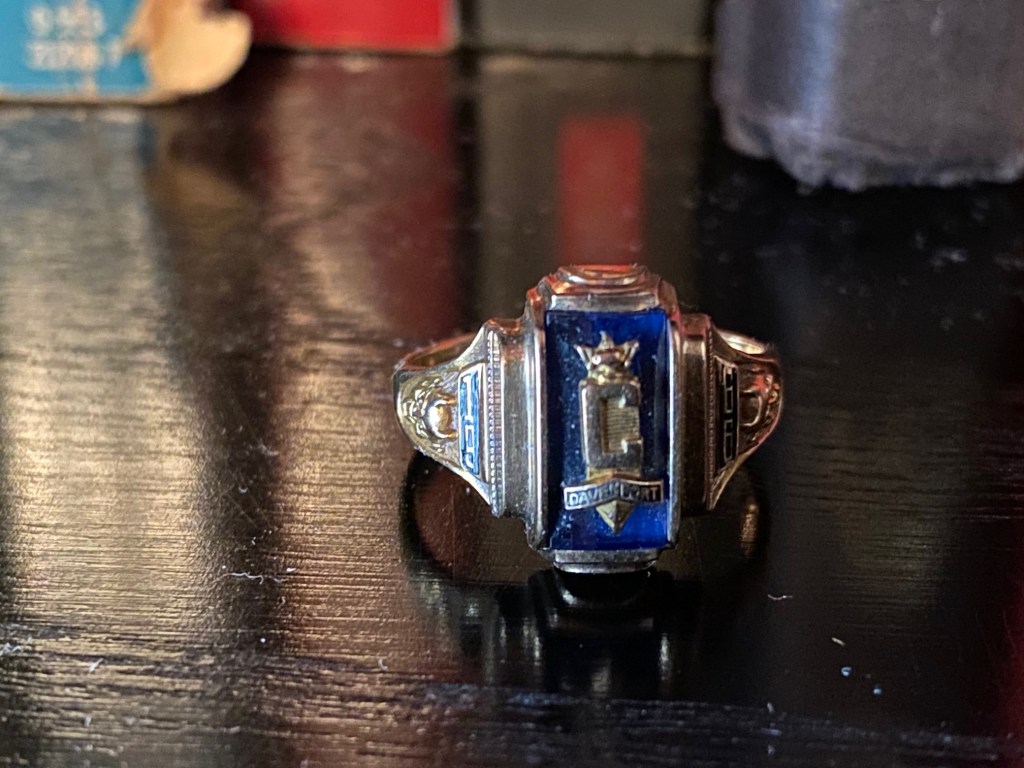
At some point, I acquired my mom’s high school class ring, which I happen to like better than both of my own:
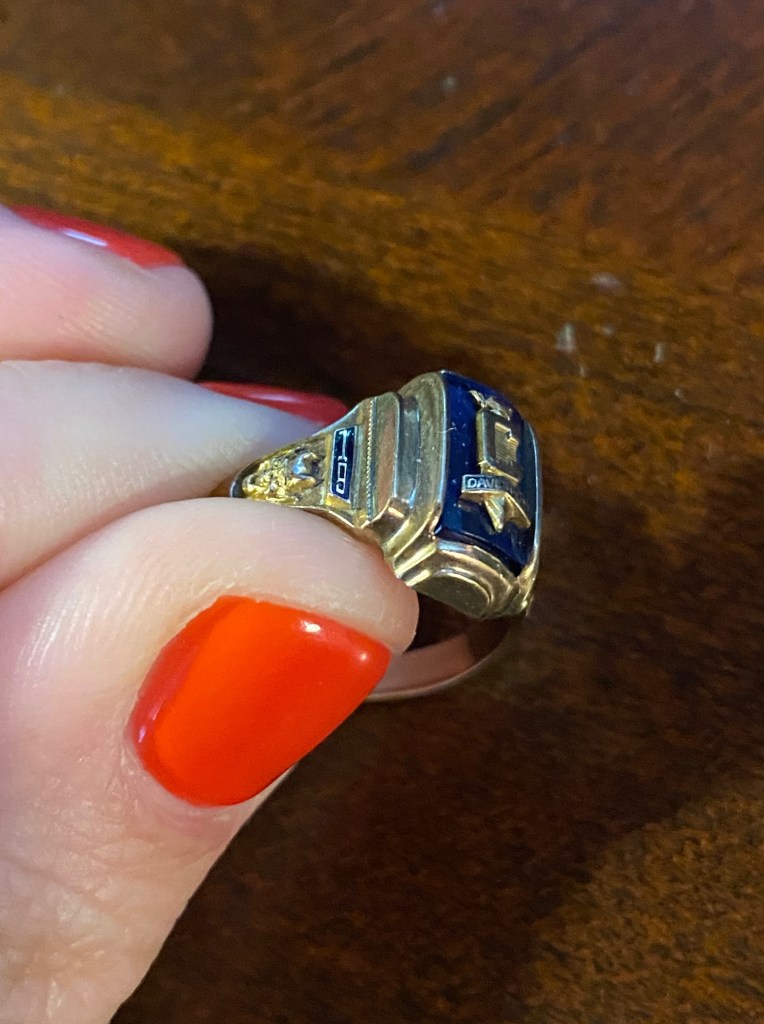
My mom’s high school ring.
Hers, which is set in 10k gold, appears to feature the “comedy and drama” masks on either shoulder, her graduation year across a central deep blue stone, and a “C” insignia with a tiny “Davenport” inscription for Central High School in Davenport, Iowa, where she grew up. Her initials are also etched inside her band (that must be a thing). Her ring has some really beautiful art deco waterfall lines:
I remember when the ring catalogs were distributed during senior year of both high school and college. At the time, I thought the rings were an absolute necessity to serve as a lifelong reminder of my academic achievements and glory days (only kidding). But in actuality, my rings have sat in my jewelry box, largely untouched, for years. Why is that?
It’s not because they’re ugly, which they certainly are not. Maybe it’s because they’re too…personal? Too gimmicky? Too tied to a specific place and time to feel relevant today? It’s hard to pinpoint the reason.
The tradition of wearing class rings began at the U.S. Military Academy at West Point in 1835. According to custom, the wearer should face the insignia on the ring inwards while still enrolled in school, and after graduation, the ring can be worn with its insignia facing outwards.
If you’ve ever met someone who graduated from MIT, they might have been wearing the school’s very distinct class ring, shown here:
Although it is affectionately called the “Brass Rat,” this ring depicts a beaver, not a rat, and is made in various alloys of gold, platinum, or stainless steel–not brass. The beaver is MIT’s mascot because it is considered to be “the engineer of the animal world.”
Next time you see someone wearing this ring, you can impress them with your very esoteric factoids.
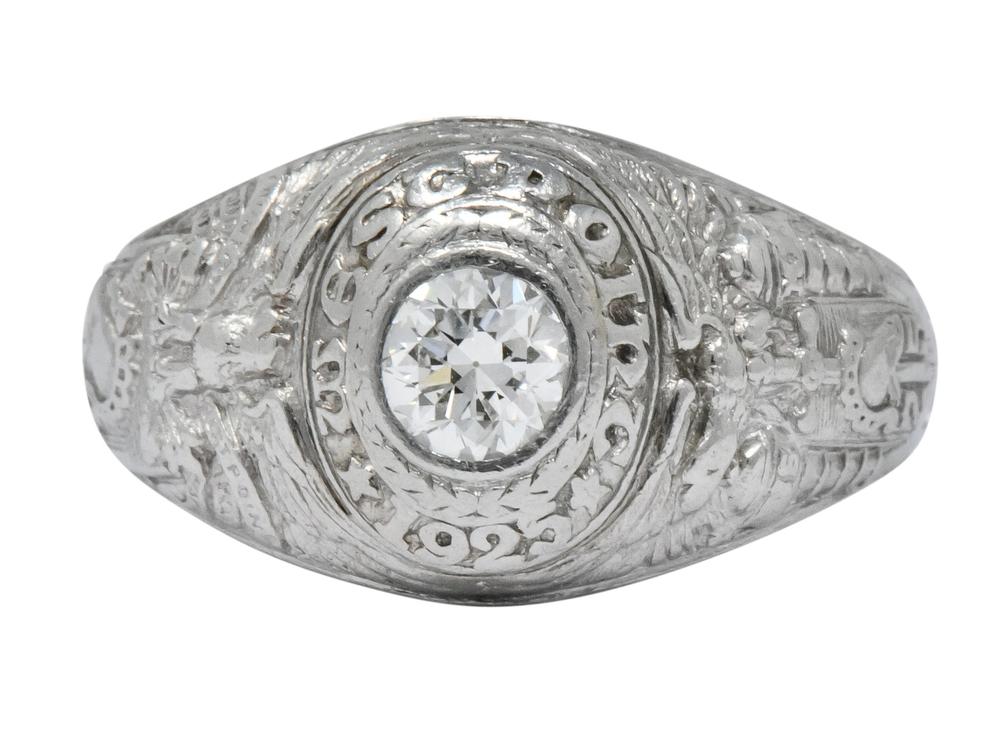
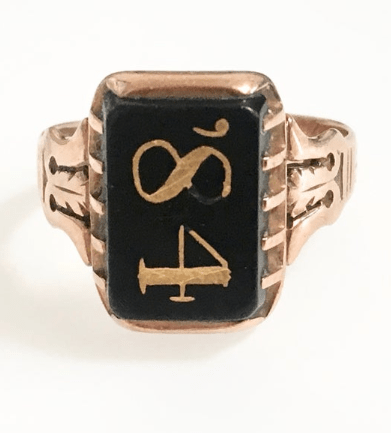
I scoured the Internet for modern designer versions of class rings, but that appears to be a niche market that doesn’t yet exist. Instead, I leave you with these lovely vintage class rings:
My initials spell C.A.T., which is also my nickname. My parents, sister, husband, and some friends call me “Cat” to this day. My grandmother (bless her) even thought my name was Catherine at one point. Coincidentally, the first letters of the first names of my immediate family members spell “CATS”: Caroline, Andy, Theo, and Sloane. And despite all this, I’m a dog person!
Why am I telling you this? Because today we’re talking about: initial jewelry.
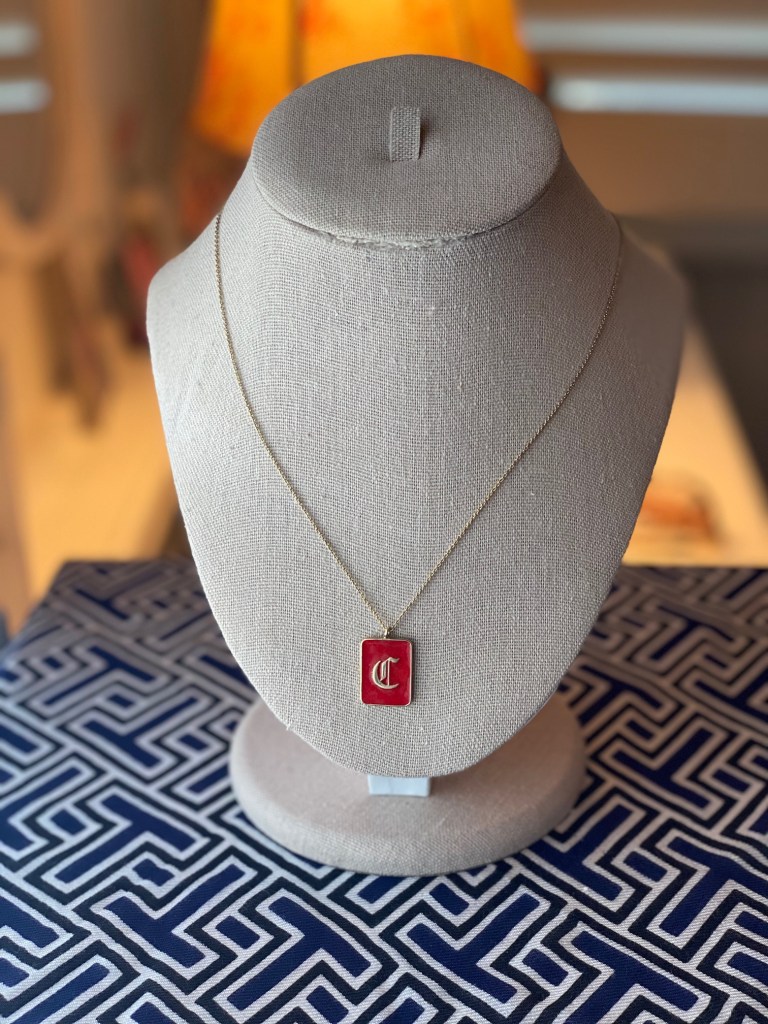
I find personalized jewelry so charming. Wearing my own initials feels coy and oddly collegiate–like I’m in a sorority of one. Wearing my loved ones’ initials feels sentimental and romantic, like I’m carrying them with me.
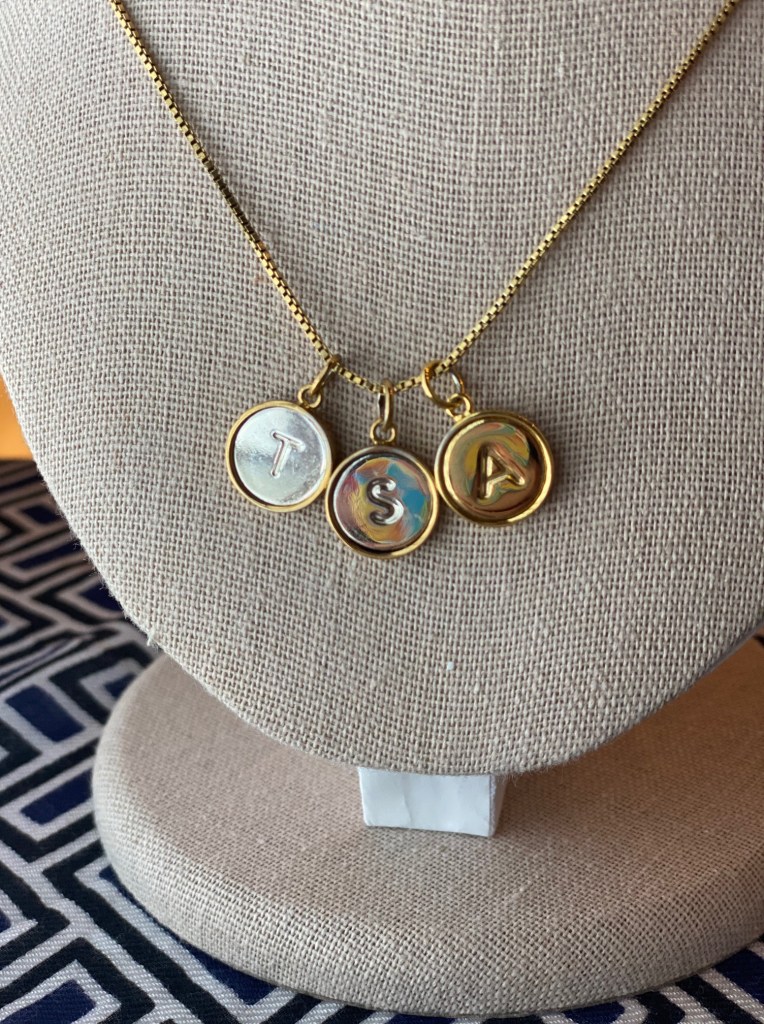
I purchased this stamped charm necklace featuring my husband’s and kids’ initials from the mega source for initial and monogrammed goodies, Mark & Graham:
You might have noticed that the “A” charm is gold while the other two are silver. That’s because this was originally supposed to be a necklace for only my kids’ initials. But when my husband caught wind that he had been omitted, he was hurt. So to appease him, I bought him a special golden “A” charm. Now people regularly ask me about my three kids…
Mark & Graham has so many other great initial options, like these:
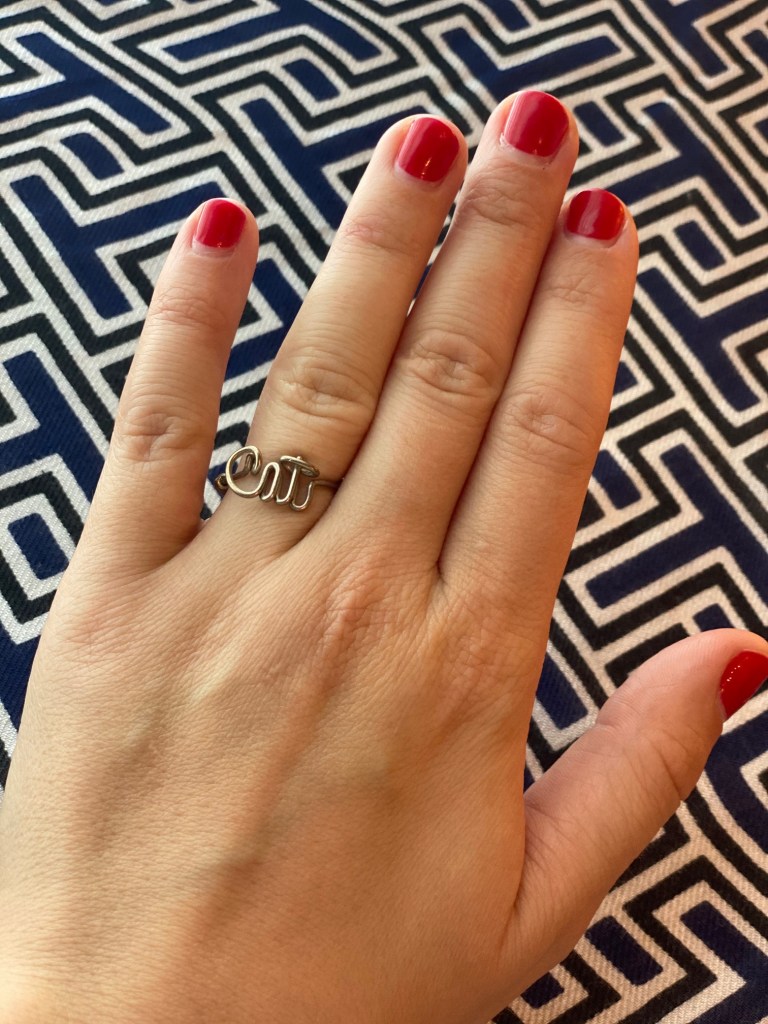
This ring dates back to my elementary school days. I vaguely remember buying it at a kiosk on Navy Pier where they twisted wire to spell your name:
I’ve saved it all these years because it’s still cute, it still fits, and my name is still Cat. For similar items that don’t require a trip to Chicago, see here and here.
Finally, I got these enamel initial pins at Gap approximately 100 years ago. I like to pin them on a jean jacket or canvas bag for a whimsical touch:
These silly Monogram Pins from Anthropologie achieve a similar playful vibe (they’re filed under “Kids & Babies” but I don’t subscribe to those labels):
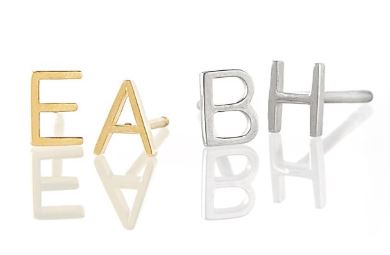
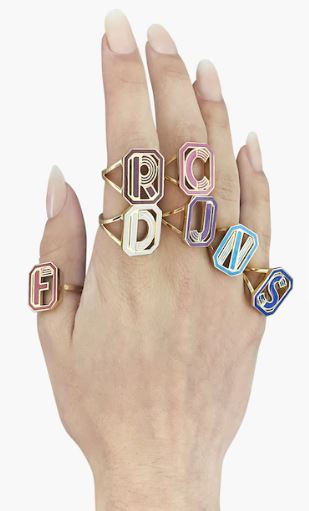
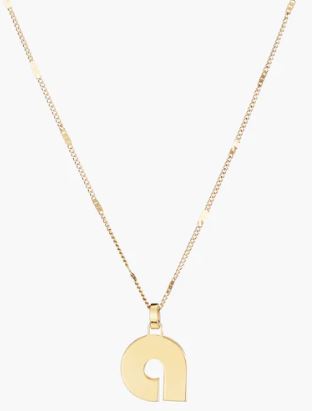
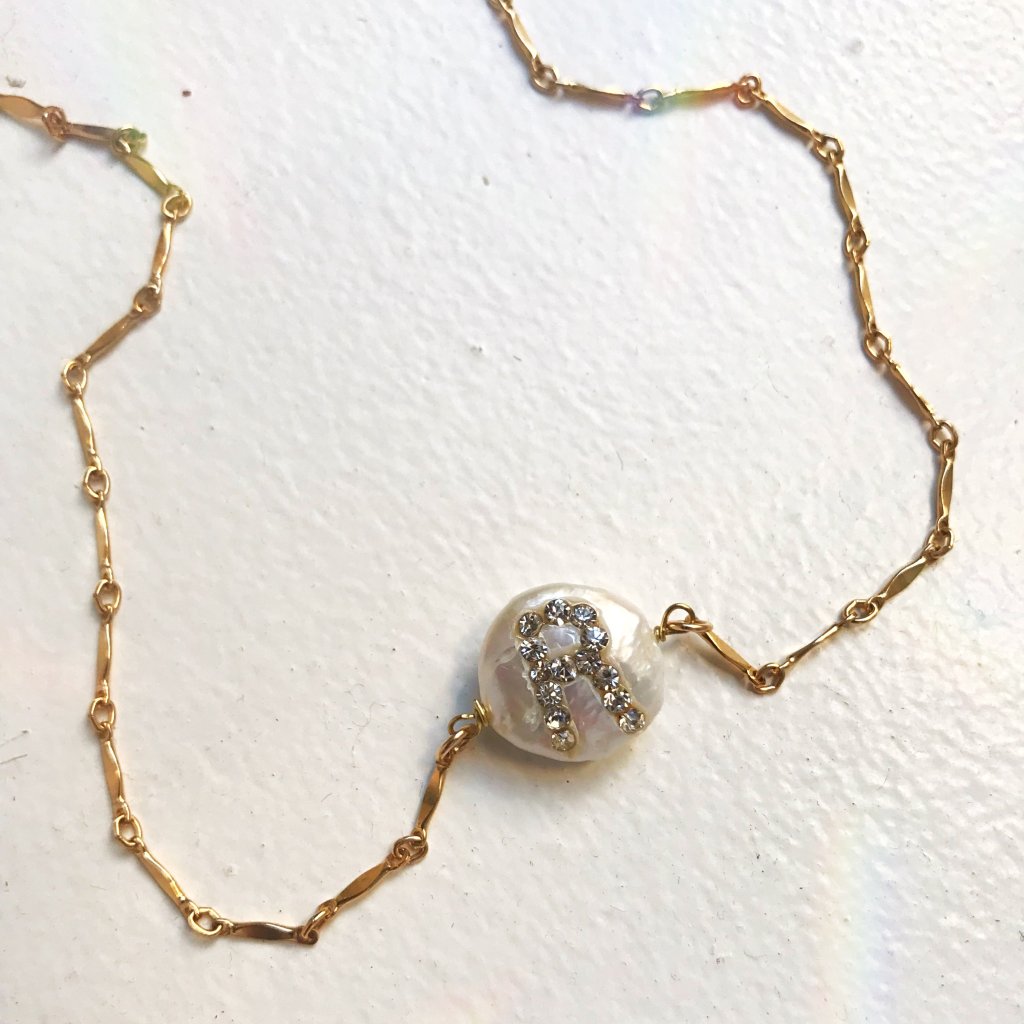
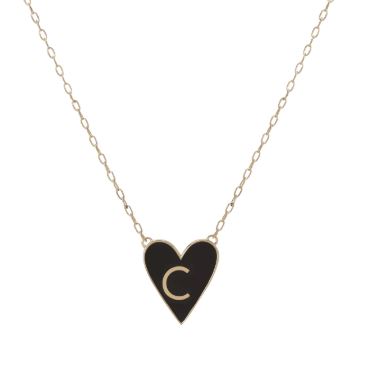
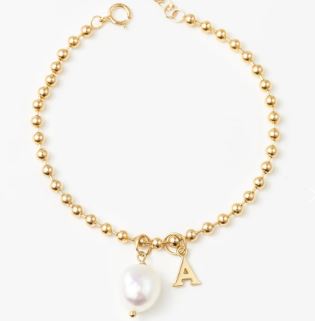
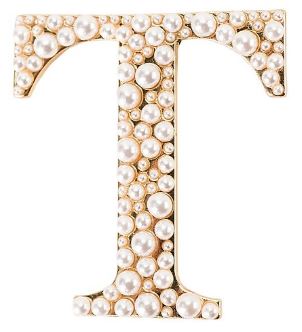
As with all things, the Internet holds a veritable ton of options for initial jewelry for you to explore. Here are just a handful of pieces that I’ve been eyeing lately:
Today marks my five-year wedding anniversary (though my husband, Andy, and I dated for fifteen years before making it official)! In researching a fitting topic for this post, I was disappointed to learn that the traditional anniversary gift for our significant milestone is…wood. Not the most romantic material.
But then I glanced over at my bookshelf and saw these wooden reminders of our wedding day–a pair of pine cones from the woods outside my family’s log cabin, decorated with sketches of me and Andy on our wedding day, as drawn by my sister (Lauren) and her now-husband (David):
Andy and I didn’t have a traditional wedding. On September 3, 2015, we got married in the chambers of a judge I had worked for during law school, with only our immediate families present. Later we had two separate parties: one for my more extended family at the cabin over Labor Day weekend, and another bigger dinner party in Chicago for all our family and friends in October. I don’t know what motivated Lauren and David to make these kooky pine-cone portraits, but I love how they embody the unique hybrid nature of our extended wedding celebrations.
My parents also have a quirky wedding trinket that a friend gave them when they got engaged. This vintage cake topper, which now lives on my mom’s dresser next to her framed family portraits, looks innocent enough from the front:
But it holds a mischievous secret when you turn it around:
So cheeky (pun intended)!
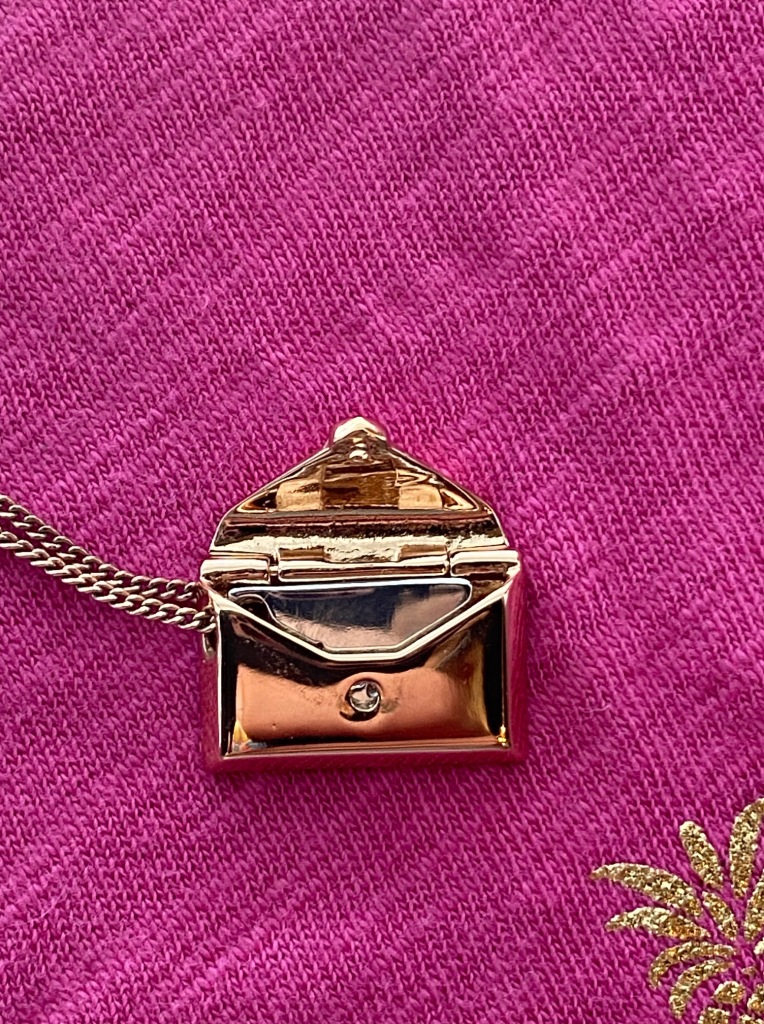
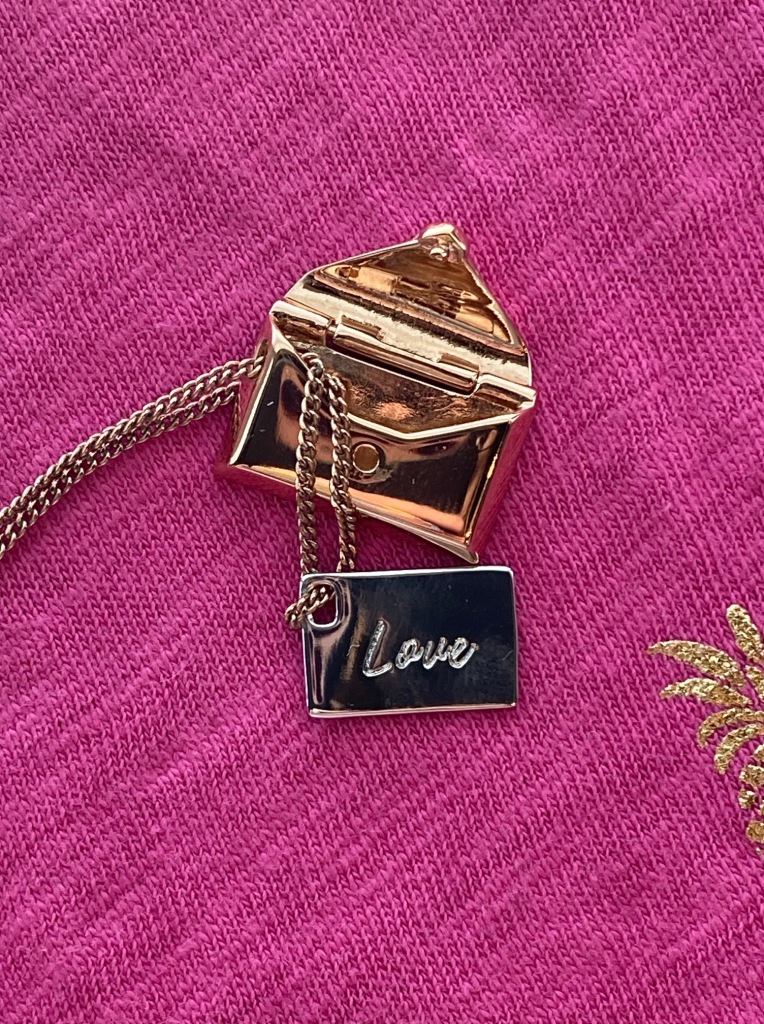
This got me thinking about a necklace of mine that also has a secret (and before you ask, no, there’s no nudity) and happens to be well-suited for an anniversary post. Instead of a traditional locket, it’s a tiny envelope with a literal “Love” note inside:
I purchased this sweet necklace from Capsul, an L.A.-based jewelry company that sells lovely, unique, romantic pieces. I opted for the basic Envelope Locket Necklace with the standard “Love” note ($75), but there is also a version with a note you can customize to feature a loved one’s handwriting or a special date (starting at $170).
Capsul also sells pieces you can have engraved with the sound-wave pattern of a meaningful audio clip (think: a baby’s giggle or your partner saying “I love you”), like this necklace and ring:
Starts at $170.
Starts at $190 for silver, $1465 for gold.
These would make perfect anniversary gifts!
In closing, I wish a Happy Anniversary to my dearest Andy! Five years happily married, twenty years of fun together, two amazing kids, one crazy dog, and two pine-cone portraits. What more can you ask for out of life?
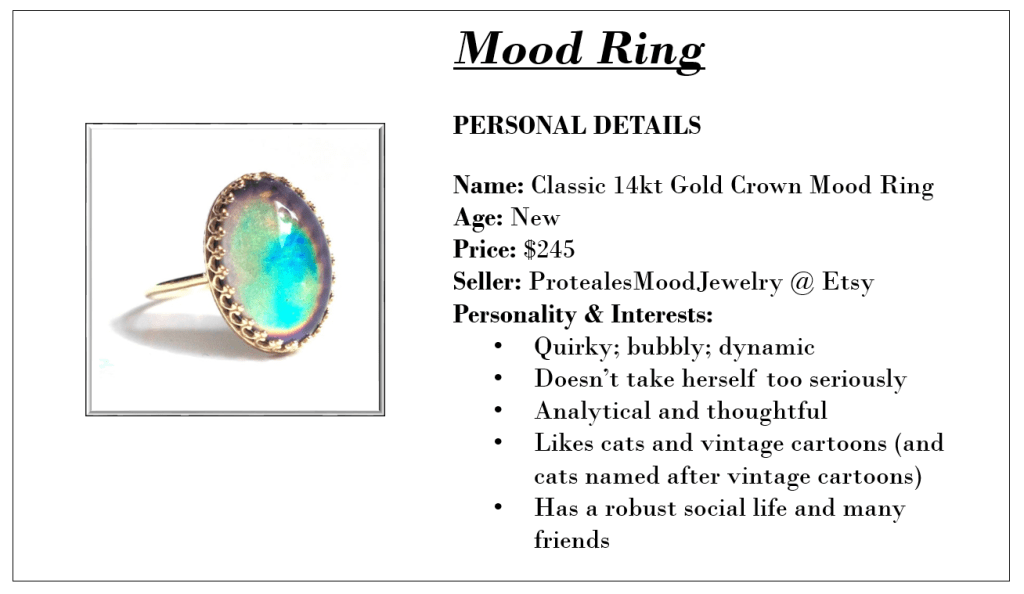
Have you watched the Netflix series “Indian Matchmaking”? If so, you know the central importance of “biodata” to the matchmaking process. (And if you haven’t, you should! Such a thought-provoking show.) Basically, a “biodata” is a dating resume that describes a person’s fundamental qualities, interests, and lifestyle. The matchmaker uses the biodata to determine whether two people are compatible for marriage. Empires rise and fall on biodata!!!
This got me thinking: If jewelry came with biodata, what would it say?
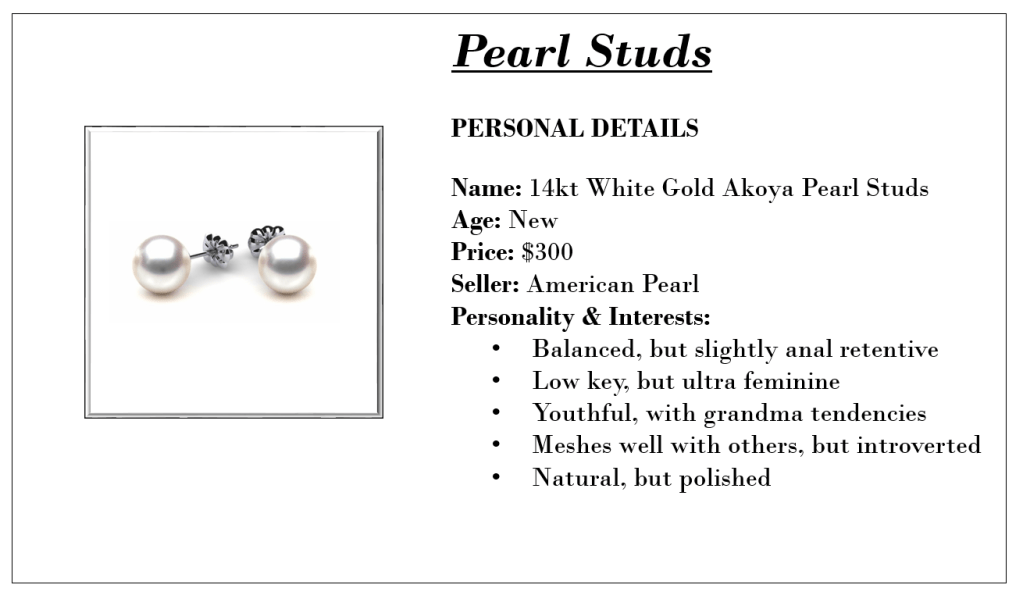
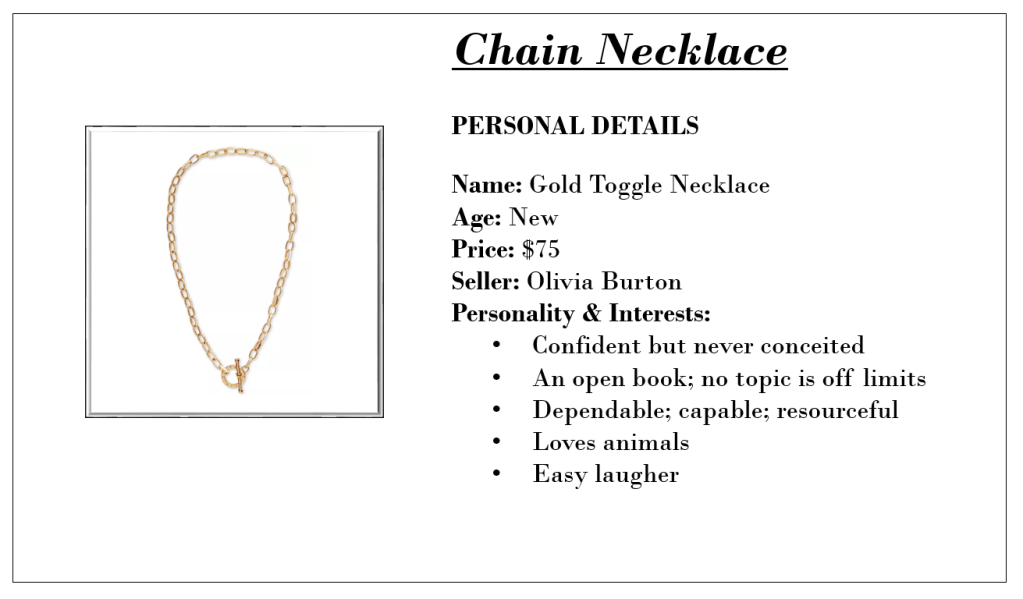
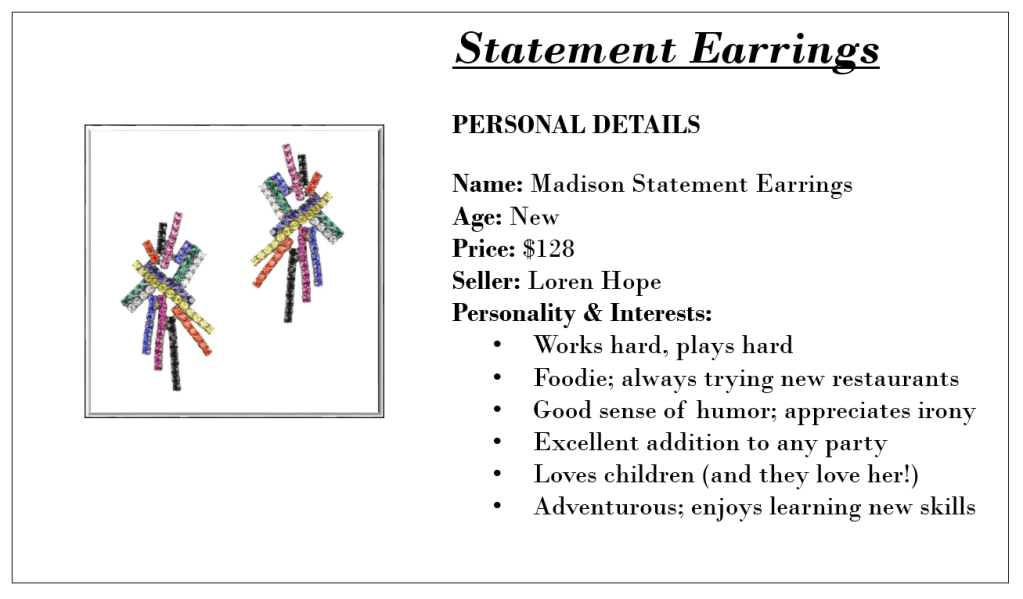
To facilitate this intellectually challenging and high-brow thought experiment, I asked friends and family to identify what type of jewelry best reflects their personality and why. I loved the answers I received from my network. It inspired me to create the imagined biodata below, some of which reflect my friends’ answers (you know who you are :)). Full disclosure: one of the biodatas is my own jewelry alter ego…
[As an aside, to cast a wider net, I also posed this question in several Reddit forums. The one and only answer I got was from user “babybossmafia” who wrote: “mushroom earrings. idk why I just like them.” Certainly not an auspicious start to my research…]
Here goes. If any particular biodata speaks to you, take the plunge!
So what do you think–any love connections here? Don’t fret if nothing suits your fancy. One takeaway from “Indian Matchmaking” is that when one match doesn’t work out, there’s always more biodata to consider.
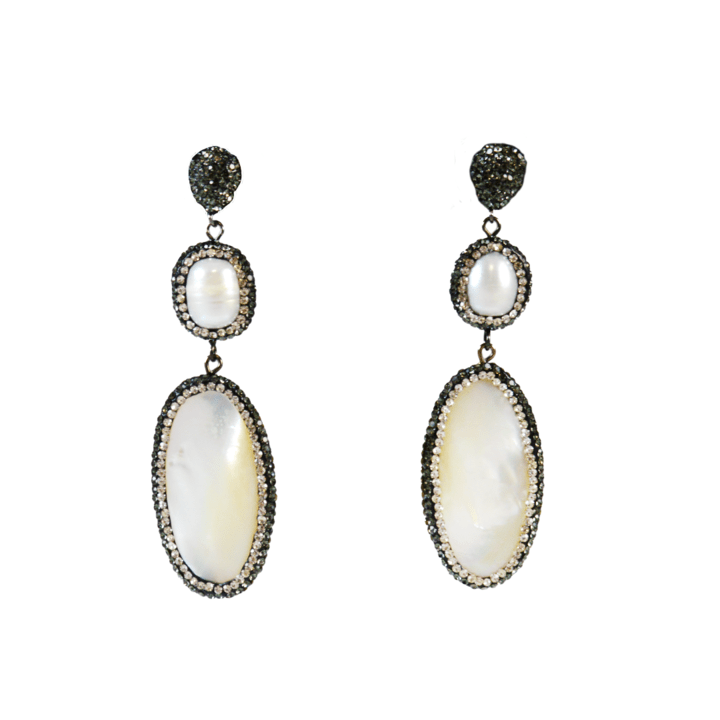
Why just buy jewelry when you can buy jewelry that supports the greater good? There are many organizations that sell jewelry to promote charitable causes and social-justice missions. Today, I’m highlighting some of my favorites. I hope you’ll consider buying from these companies the next time you treat yourself or buy a gift for a friend!
I only recently discovered this AMAZING online retailer that offers a truly vast collection of gorgeous jewelry at all price points made by a multitude of designers–many of whom I already know and love, and many fabulous ones that are new to me–in addition to clothing, shoes, and home goods. The best part: Olivela gives 20% of the proceeds from every purchase to one of their many charitable partners of your choosing. Going forward, before I buy anything from a name-brand designer, I’m first going to check if it’s available on Olivela, to make an impact whenever possible.
The Giving Keys provides full-time jobs at living wages to people transitioning out of homelessness in Los Angeles. The company’s employees make interesting jewelry with overarching key/lock and empowerment themes:
Serendipitous Project is committed to sustainability and aims to provide “daring and unique” eco-conscious affordable jewelry. “All items from our permanent collection are handmade-to-order to reduce waste. We also sell one-of-a-kind up-cycled accessories and vintage pieces to minimize the impact on the environment.” I love the organic and sea-inspired vibe of their original pieces:
Rebel Nell is an awesome organization that “partner[s] with local organizations to seek out women who have struggled to find and retain employment. We hire these women as Creative Designers, teaching them to craft unique, wearable art from fallen layers of graffiti, while providing services to support them on their way to self-sufficiency.” These pieces are truly works-of-art made from works-of-art:
Same Sky’s mission is to “empower[] women by providing training and employment opportunities. We help women rebuild their lives, reconnect to their creativity, build skills through artistry, and restore confidence.” The organization has provided over 85 women in Rwanda with marketable skills and steady employment making jewelry, and has also provided employment for women who were recently released from prison in the United States. Same Sky’s beaded pieces reflect so much careful and intricate detail work:
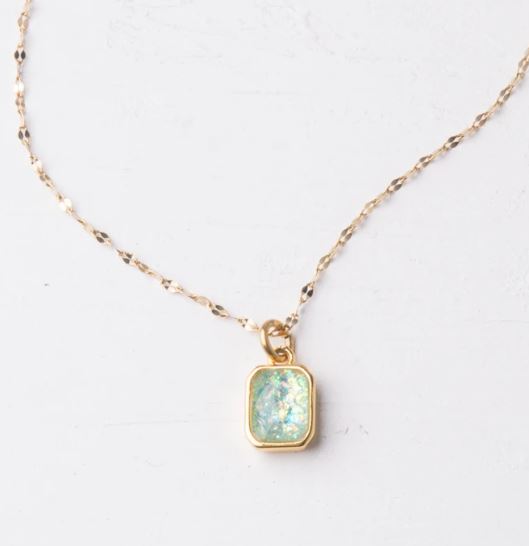
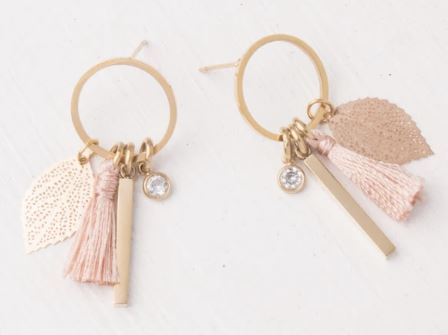
Starfish Project is an organization that “helps exploited women and girls experience freedom, establish independence, and develop careers” by teaching them how to make jewelry. The company’s products are affordable, wearable, and trendy:
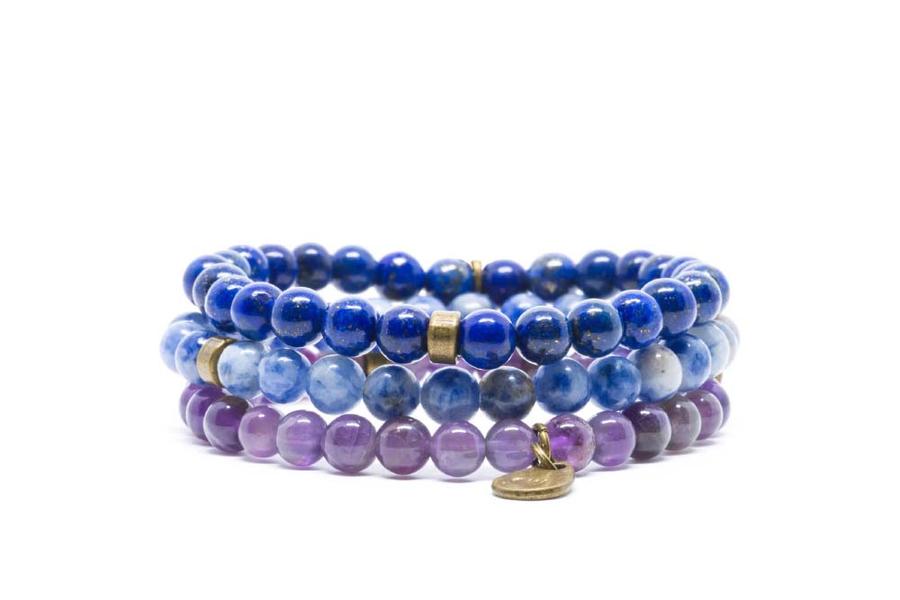
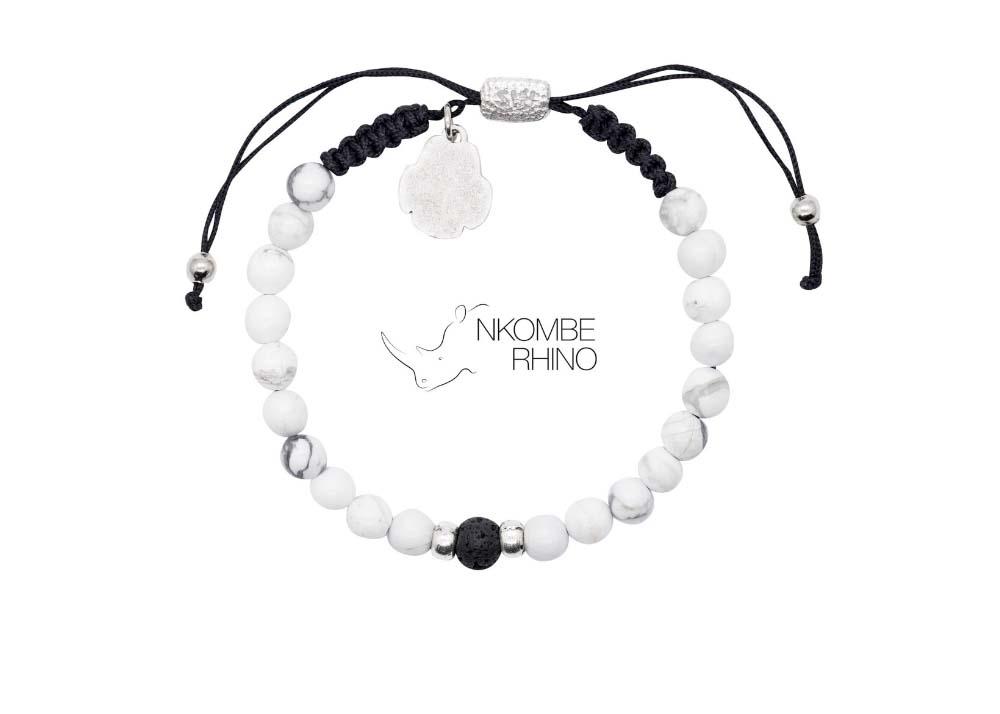
Wild in Africa is a jewelry company that sells an assortment of beautiful beaded stacking bracelets and donates 50% of the purchase price to animal conservation organizations in 10 African countries.
Passport Ocean is a “socially-minded online ecommerce shop” with a mission “to raise awareness for cleaner seas and help clean up the world’s oceans, prevent the slaughter of their inhabitants and the destruction of their habitats.” They donate 15% of their gross monthly profits directly to Ceta’Sea, a marine conservation charity. Their ocean-themed jewelry is perfect for summer:
From War to Peace sells jewelry and art made of recycled copper from disarmed nuclear weapon systems. The company uses only recycled materials and donates a portion of its profits to organizations committed to social justice and promoting peace.
There is so much beautiful jewelry in the world that has a ton of sparkle without costing a fortune. Gone are the days when your only choices for bling were either expensive diamonds or lackluster rhinestones. Today, you can find gorgeous pieces featuring diamond-like substitutes that quite convincingly replicate the real deal at a wide range of price points.
This post explores the multitude of options and the differences among them. Along the way, I’ll present you with quizzes to test how well you can identify which pieces are made of diamonds vs. a less-expensive substitute. Answers appear at the end (don’t cheat!).
Lab-CreatedDiamonds
Naturally mined diamonds come from within the earth and were formed billions of years ago under conditions of intense heat and pressure. (Read more here.) Lab-created diamonds, on the other hand, have all the same physical and chemical properties of naturally mined diamonds, but are grown in a lab under conditions that replicate the natural diamond growing process.
The biggest advantage of lab-created diamonds is that they cost less than natural diamonds while looking indistinguishable to the naked eye. Don’t be mistaken, though, they are not cheap. According to this site, the capital costs for lab-grown and mined diamonds are similar, but lab-grown diamonds have a shorter supply chain than mined diamonds, which makes them somewhat cheaper.
Another big advantage of lab-created diamonds is that they don’t pose the same ethical concerns as mined diamonds. And because they don’t require mining, they are also kinder on the environment.
Interestingly, lab-created diamonds are graded and certified using the same standards as naturally mined diamonds (i.e., the 4 Cs–cut, clarity, color, and carat). So you can easily compare a lab-created gem with an equivalent naturally mined gem to really see the price differential.
Not everyone is a proponent of lab-created diamonds. According to this article, which was published by the National Diamond Council (so take it for what it’s worth), diamond experts caution that lab-created diamonds will not hold their value over time as they become easier to produce and more widely available. These diamond loyalists also bemoan that lab-created diamonds have “something soulful missing” because unlike mined diamonds, which are “miracles of nature,” they are mass-produced in a lab and lack the deep “historical significance, symbolism, and yes, love.” So if you care about that stuff more than getting sparkly bling at a lower price, lab-created diamonds aren’t for you.
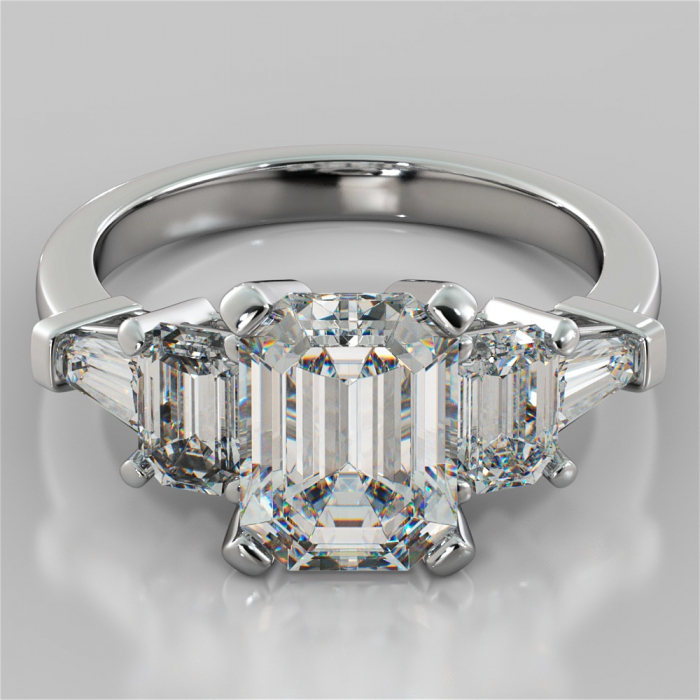
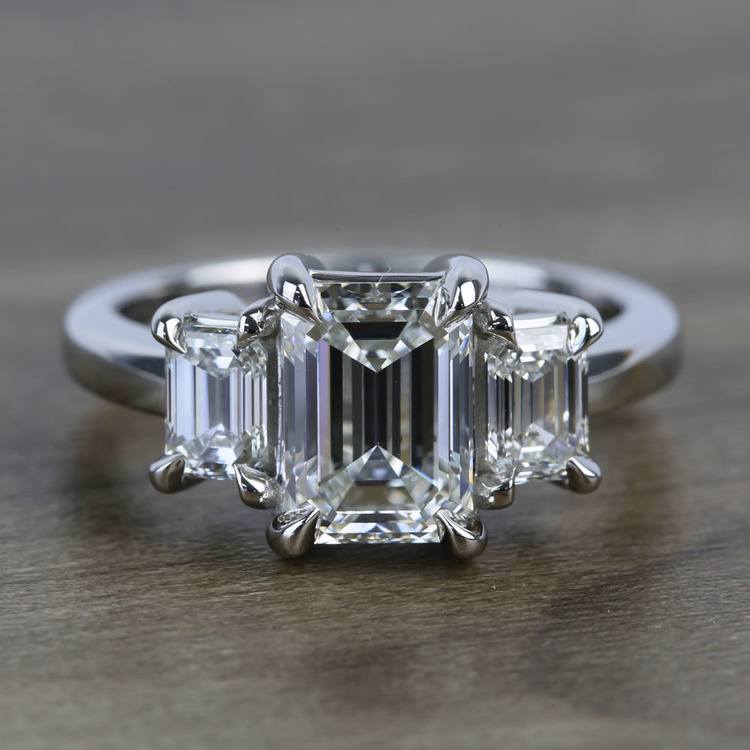
Here are two nearly identical pieces, except one features naturally mined diamonds and costs $36,000, while the other one features lab-created diamonds and costs $1,400:
Moissanite
Moissanite is a mineral that was discovered by Henri Moissan in 1893 when he was analyzing rock samples taken from a meteor crater in Arizona. Moissan initially thought the crystals were diamonds, but later identified them as silicon carbide.
Because natural moissanite is super rare, the moissanite used in jewelry today is lab-created. According to this helpful guide, there are some key differences between diamonds and moissanite, even though they superficially appear quite similar.
Diamonds are the hardest known mineral (with a score of 10 on the Mohs Scale of Hardness), but moissanite is not far behind at 9.25. That makes this mineral suitable for use in engagement rings, which take a lot of knocks through everyday wearing.
Moissannite is actually more brilliant than diamond and emits a “fiery, rainbow flash” in bright light. Some people prefer the more subtle sparkle of diamonds.
Like lab-created diamonds, moissanites are ethically less controversial than naturally mined diamonds and are more eco-conscious. They are also much less expensive than diamonds.
Finally, unlike diamonds, which are graded on the “4 Cs,” moissanites are graded solely based on color. The most expensive moissanites are colorless.
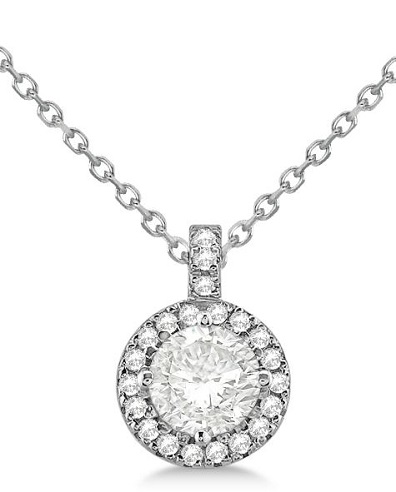
So, think you can tell the difference between moissanite and diamond? Below are two similar pendants, one made with moissanite that costs $600, and the other made from diamonds that costs $6,300:
Cubic Zirconia
If we’re getting technical, cubic zirconia (“CZ”) is the “cubic crystalline form of zirconium dioxide (ZrO2).” It is exclusively manufactured in labs and does not occur in nature. Commercial production of this diamond alternative began in 1976.
Like the other substitutes discussed above, CZ is significantly cheaper than diamonds and, because it is not mined, it is ethically and environmentally more favorable than diamonds. It is also inherently flawless, which can’t be said for most naturally occurring diamonds.
CZ is not a perfect substitute, however. It has a lower hardness than diamond and moissanite (8.5 on the Mohs Scale), meaning it scratches more easily and will show more wear. It also has a lower refractive index and is thus less sparkly than diamonds. CZ will also become cloudy over time and requires regular cleaning to keep its shine. Read more here and here.
All that said, CZ may not be the best choice for an engagement ring (if the other options above are feasible), but it is a fine choice for convincing costume jewelry.
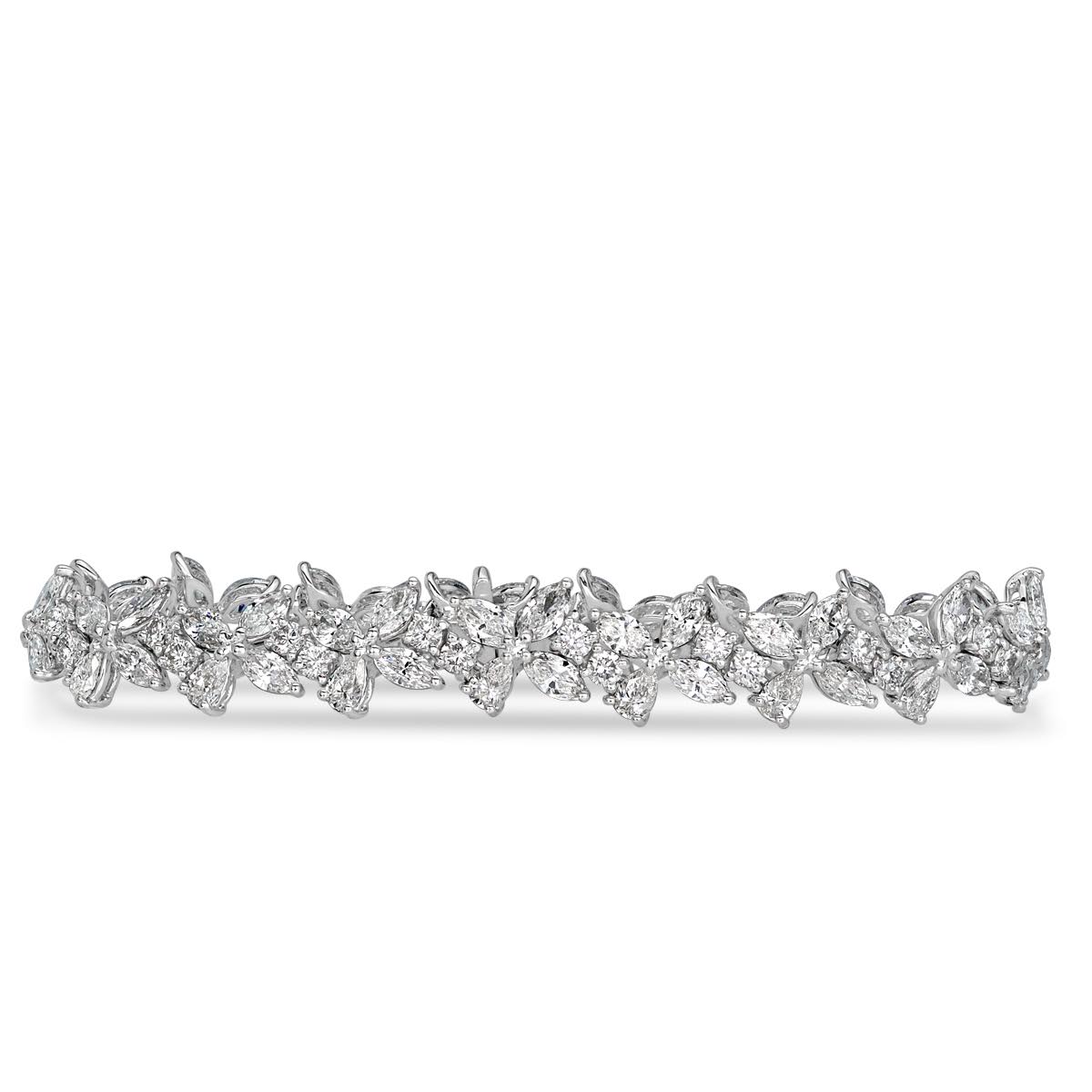
Below are two similar flower bracelets, one made with diamond that costs $20,000, and the other made from CZ that costs $150:
Other Choices
Lab-created diamonds, moissanite, and CZ are certainly the most well-known diamond alternatives, but there are others worth considering:
WhiteSapphire: Sapphire, one of the four precious gemstones (along with diamonds, rubies, and emeralds), comes in several colors, including white. It ranks a 9 on the Mohs Scale, but has a lower refractive index and less sparkle than diamond. It appears more transparent than diamond and requires regular cleaning or else it can look dull. It is much more affordable than diamond. Read more here and here.
White Topaz: Topaz is a commonly found, naturally occurring semi-precious gemstone. It ranks at an 8 on the Mohs Scale, which–because the scale is non-linear–means it is roughly 6-8 times less hard than a diamond. That said, it is more prone to being damaged through regular wear than diamond. Topaz also has a lower refractive index than diamond, making it less sparkly and bright. As you probably predicted by now, topaz is much, much cheaper than diamond–1 carat of high-quality white topaz likely costs around $100, whereas a 1 carat flawless, colorless diamond runs around $15,000. Read more here and here.
Herkimer Diamonds: I only recently learned about Herkimer diamonds and find them very intriguing. These stones aren’t actually diamonds, but rather are a type of quartz crystals that were discovered in and around Herkimer County, New York and the Mohawk River Valley. (Read more here.) They don’t look nearly as convincingly diamond-like as the other substitutes discussed above, and at only 7.5 on the Mohs Scale, they are not durable enough for daily wear. While Herkimer diamonds may contain flaws like air bubbles and black carbon deposits, it is possible to find high-quality, completely clear stones. (Personally, I think the flawed stones are pretty neat–see here and here.) These stones can resemble glass because they lack the brilliance of diamonds. But–you guessed it–they are more affordable than diamonds! Read more here, here, and here.
Long story short, nothing is as hard, perfectly brilliant, or expensive as diamonds. But most of these details are quite technical unless you’re looking specifically for a piece that will last forever with minimal wear and hold its value (e.g., an engagement ring). If, instead, you’re just looking for some pretty bling, any of the above are excellent choices!
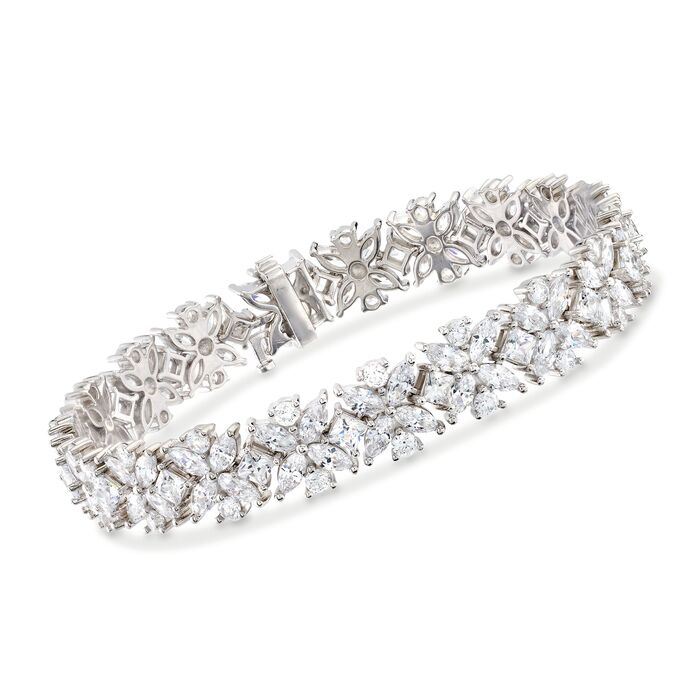
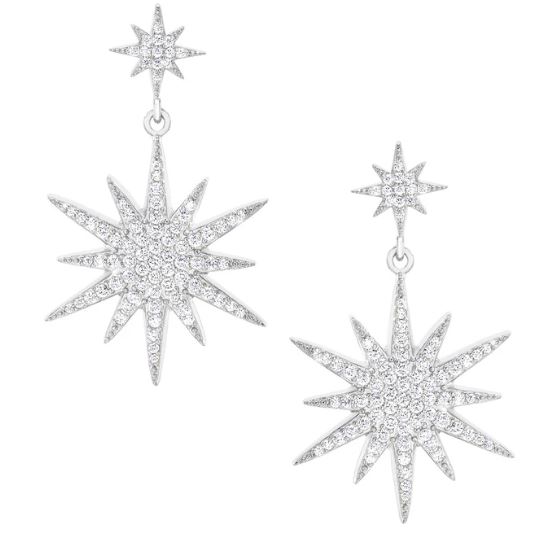
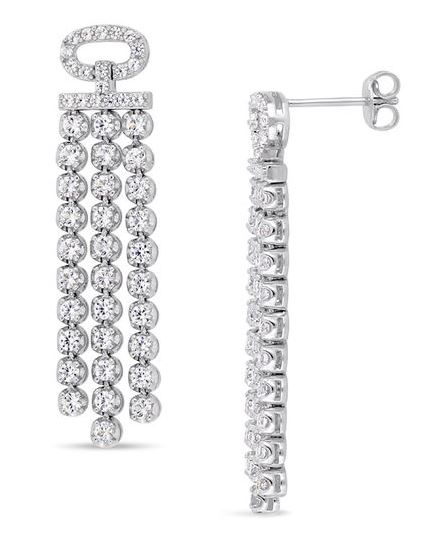
For your last quiz, I challenge you to rank the following pieces in order of least expensive to most expensive:
NO. 1
NO. 2
NO. 3
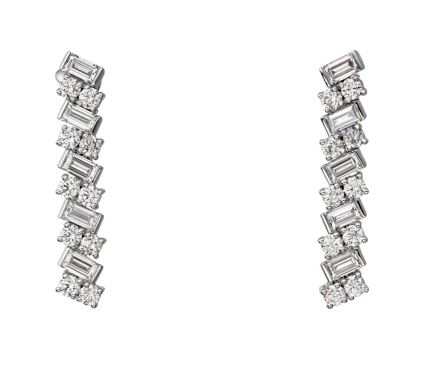
Here are some great online stores I’ve found for beautiful diamond-alternative jewelry:





























 Fruit of Jewels